Answers with sources
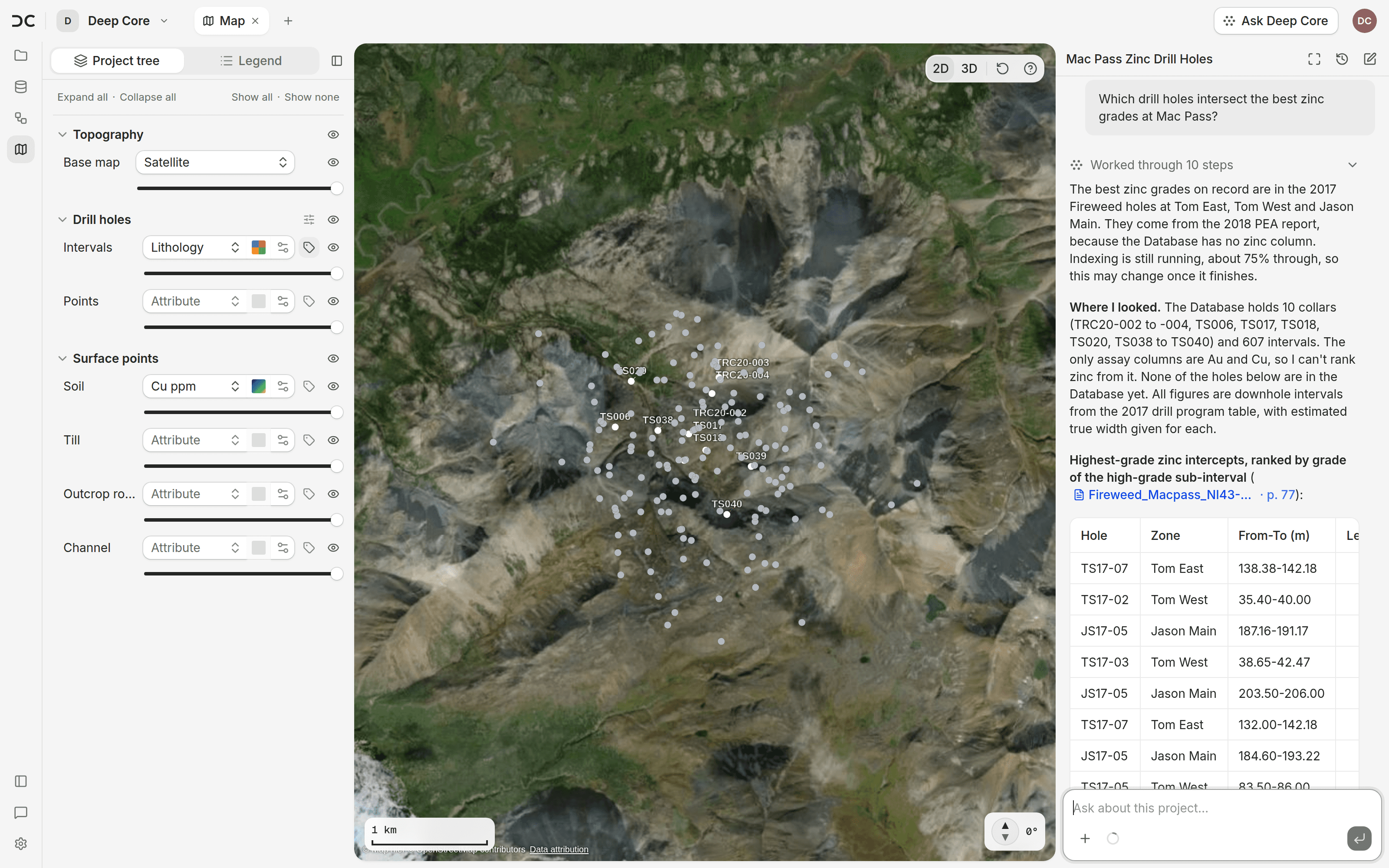
Ask about the project in plain language. Every answer lists the pages and files it came from.
Deep Core handles the data wrangling so geologists can focus on interpretation.
The problem
Exploration data rooms are messy: the collars are in one report, the assays in another, and the sample numbers aren't tied to any hole. Someone spends weeks flipping between the PDF and the spreadsheet, and the database still has the wrong hole name in it.
The shift
Without Deep Core
Expert geologists spend their time wrangling spreadsheets and looking through 300-page reports to chase down where a number came from.
With Deep Core
Your team spends more time interpreting geology and back out in the field.
How it works
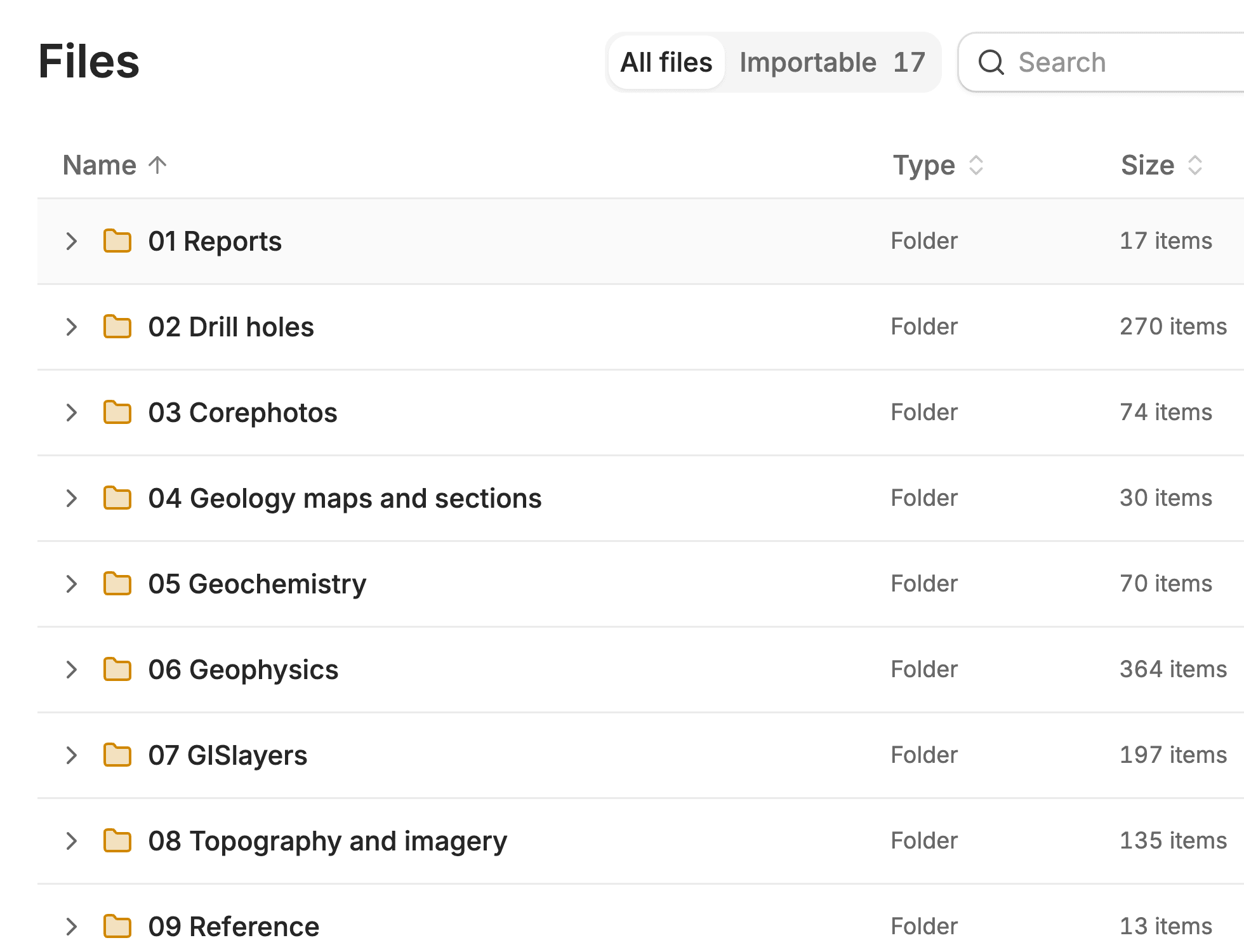
Drag and drop all your files at once: reports, scanned logs, maps, spreadsheets and photos. Every page is read and made searchable.
What it does today
Deep Core does the reading, cleaning and querying, so the time goes into the geology.
Ask about the project in plain language. Every answer lists the pages and files it came from.
Reports, scanned logs, maps and spreadsheets, read and searchable by meaning.
Counts, intersections and grades, queried across your tables and spreadsheets.
Imports and the agent's edits arrive as changes you approve. Every value keeps the file it came from.
Collars, surveys and intervals desurveyed and drawn in 3D, coloured by any attribute.
Your data
Reports, logs and certificates, scans included
Read alongside the reports
Queried as it is, or imported into the database
Collars, surveys, assays and logs
Core photos and scanned maps, read and described
Coming soon
Questions
See how fast your team gets from a data room to a decision. No commitment.